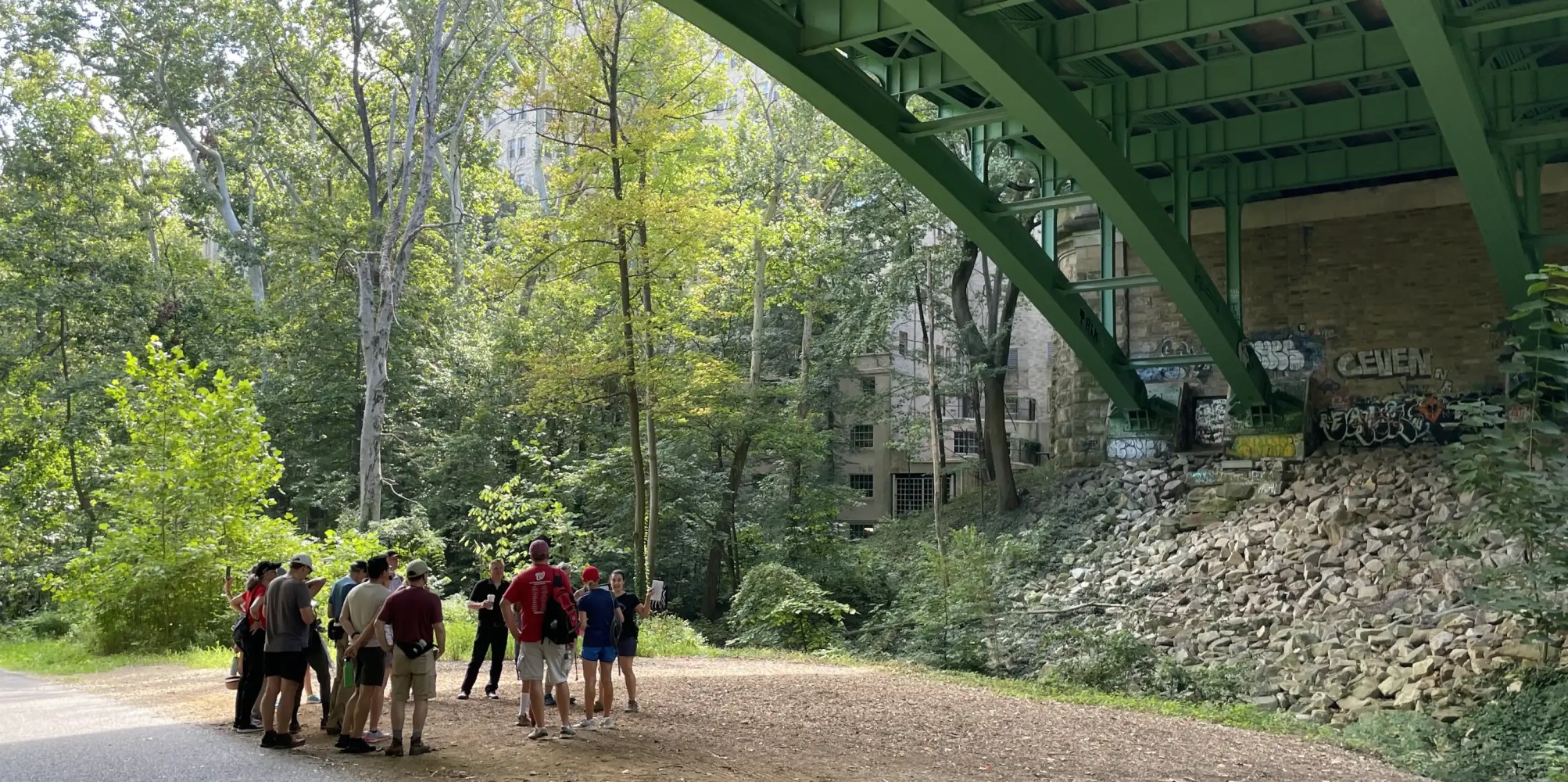
The Hidden History of Rock Creek Park
How war, rapid growth, and urban planning shaped one of Washington’s greatest public spaces.
Long before Rock Creek Park became one of Washington’s favorite escapes, it was the product of a rapidly changing post–Civil War capital and a growing realization that cities need nature to survive.
In 1890, Congress established Rock Creek Park, setting aside roughly 1,700 acres along a winding waterway that cuts through the heart of Washington. Rock Creek Park was just the third national park in the United States, following Yellowstone and Mackinac (now a state park). While Yellowstone protected a spectacular western landscape and Mackinac preserved a strategic island in the Great Lakes, Rock Creek Park was something different: a large natural reserve embedded within a growing city.
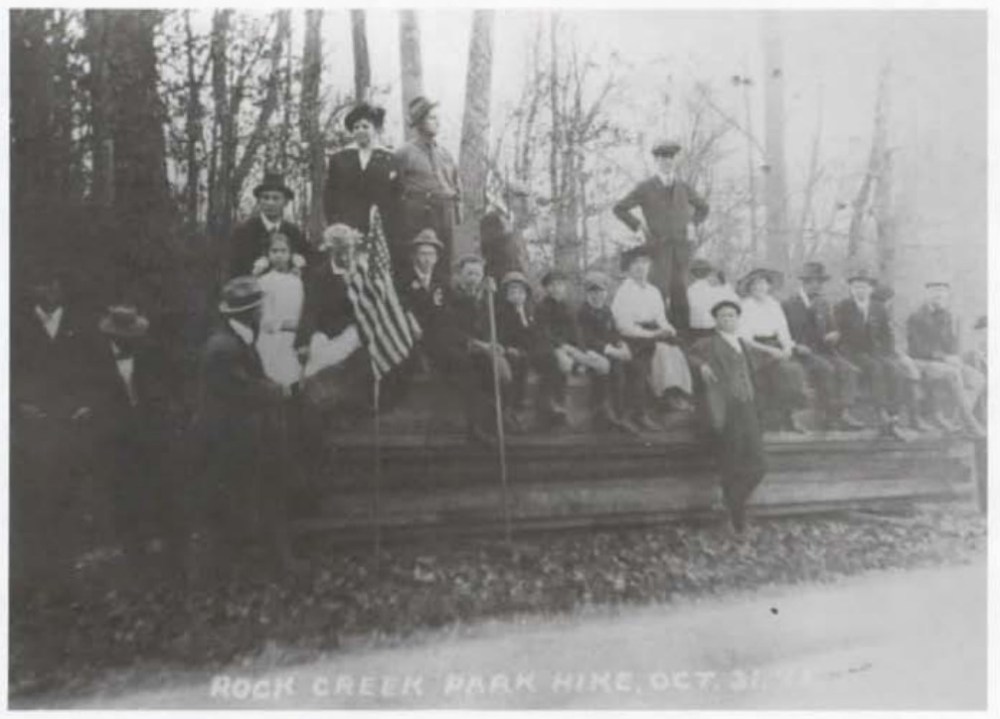
Hikers in Rock Creek Park, 1915
Washington was transformed during the Civil War and its aftermath. Tens of thousands of soldiers, formerly enslaved people, and refugees flooded into the city, pushing the population from about 75,000 in 1860 to nearly 280,000 by 1900.
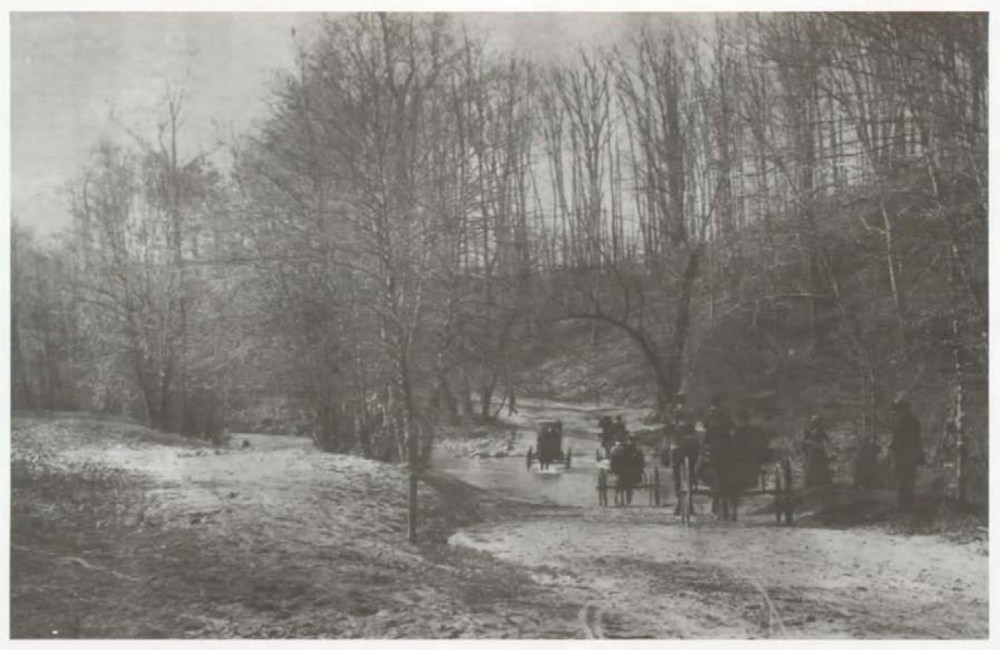
Cars drive across Klingle Ford in Rock Creek Park, 1890
The landscape changed just as dramatically. Forests were cleared for military fortifications, with dozens of forts, batteries, and miles of trenches reshaping the hills surrounding the capital. At the same time, basic infrastructure struggled to keep up. Sewage from Georgetown and Northwest Washington flowed directly into Rock Creek, creating serious public health concerns and highlighting the need for better planning.
By the late nineteenth century, the need for open space had become urgent. Across the country, city leaders were embracing a new idea: parks were not luxuries, but essential public infrastructure. They provided cleaner air, opportunities for recreation, and a respite from the noise, congestion, and pollution of urban life. Washington followed suit. Rock Creek Park was envisioned not merely as a scenic retreat, but as a place that would improve the health and quality of life of the growing capital.
Designing a Natural Park
Creating a park, however, did not necessarily mean redesigning the landscape. When it came time to shape Rock Creek Park, the task fell to brothers Frederick Law Olmsted Jr. and John Charles Olmsted, sons of the revered landscape architect Frederick Law Olmsted Sr., designer of New York’s Central Park and many of America’s most influential public landscapes. Their approach to Rock Creek was remarkably restrained.
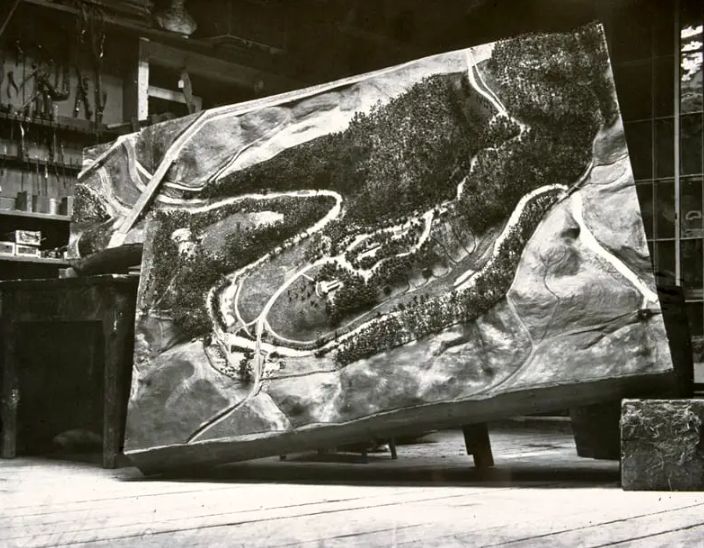
A model of National Zoological Park developed by Frederick Law Olmsted Sr.
Unlike Central Park, which was carefully constructed within a gridded city and required extensive earthmoving, planting, and engineering, Rock Creek already possessed what the Olmsteds valued most: a dramatic natural landscape. Steep wooded slopes, winding streams, rocky outcrops, and constantly changing topography created a sense of immersion that was increasingly rare in American cities. Rather than imposing a formal design on the landscape, the Olmsteds sought to preserve and reveal what was already there.
Of the park’s approximately 1,700 acres, only about 300 were formally landscaped. The vast majority was left in a largely natural condition. Roads were carefully routed to follow contours rather than dominate them. Trails were designed to bring visitors into close contact with the creek valley. Views were opened selectively, allowing visitors to experience changing scenery while maintaining the feeling of moving through a forest rather than a city park.
This philosophy reflected a broader belief held by the Olmsteds: that contact with nature was not simply enjoyable, but restorative. A successful park should provide a psychological escape from urban life. Visitors should feel removed from the city, even when the city remained only a short distance away.
More than a century later, that experience remains surprisingly intact. Step off a neighborhood street and descend into the valley, and traffic noise fades. The terrain becomes steeper. Tree cover closes overhead. In many places it becomes easy to forget that you are still within the boundaries of the nation’s capital.
A Park That Shaped the City
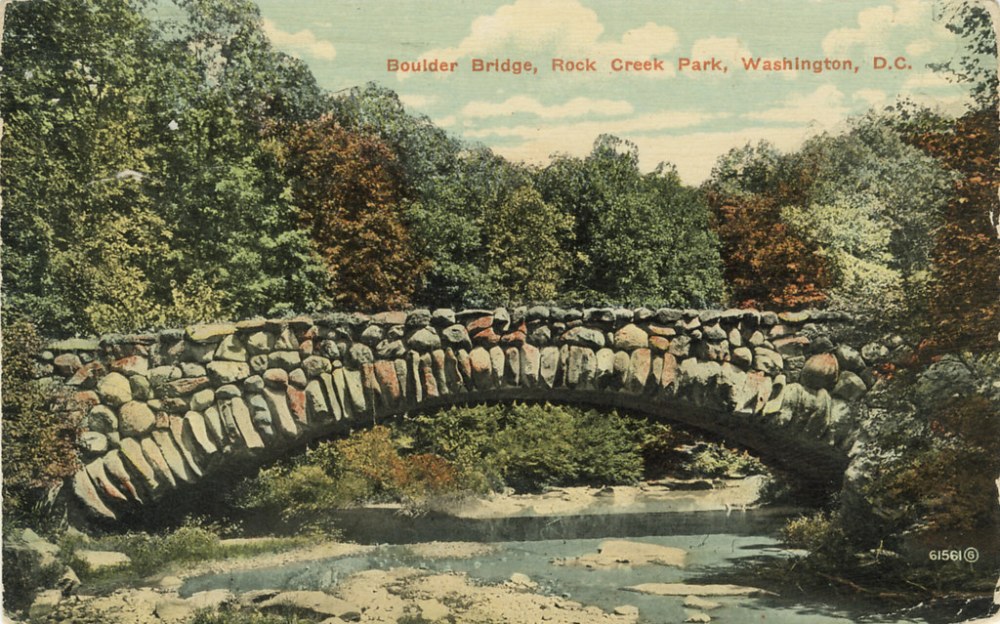
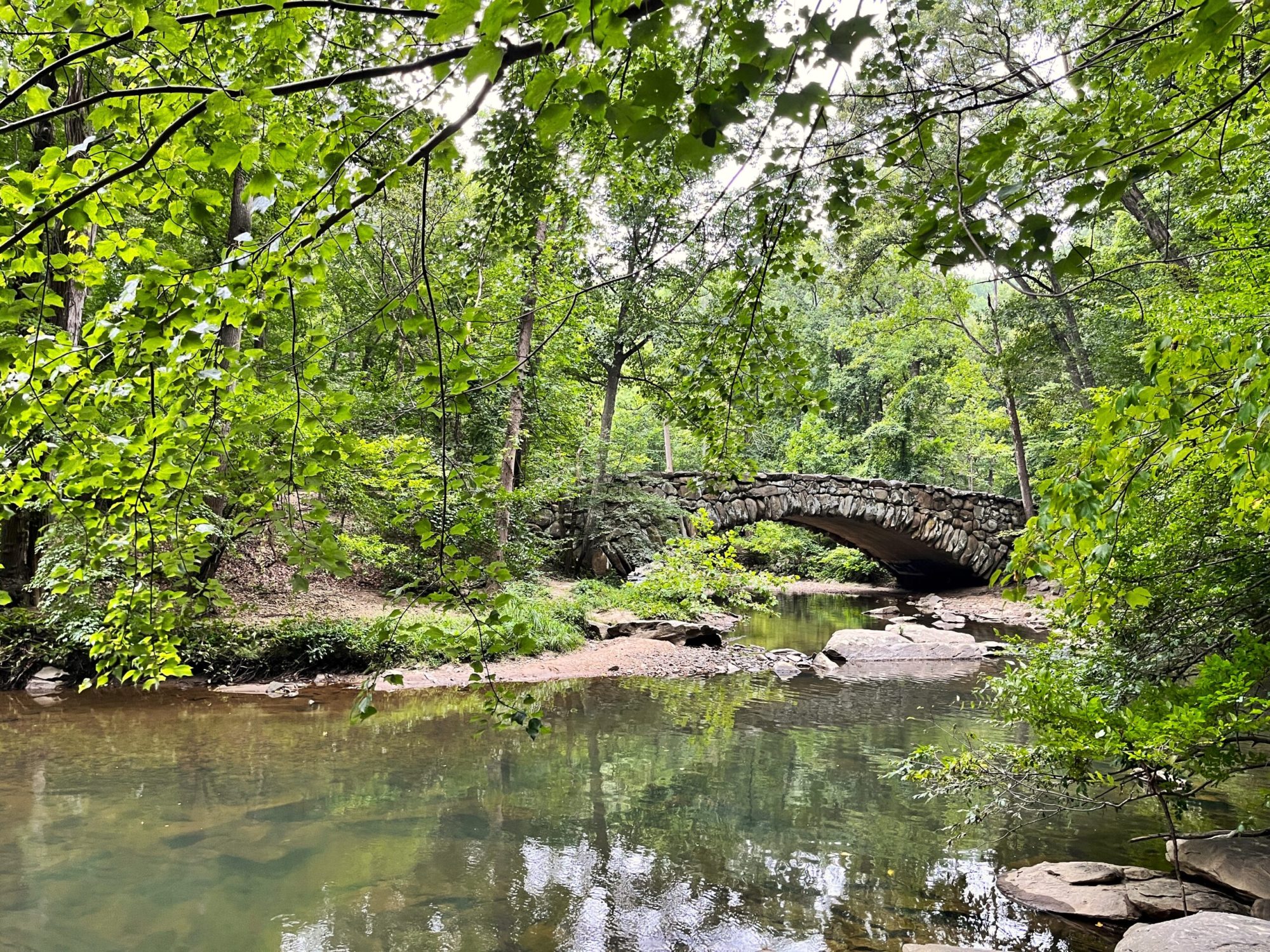
Postcard of Boulder Bridge in Rock Creek Park, 1915
Rock Creek Park was also part of a larger vision for Washington’s future. In 1901, the McMillan Plan established one of the first comprehensive planning frameworks for the capital. While the plan is best known for reshaping the National Mall, it also emphasized the importance of interconnected parkland and protected natural landscapes throughout the city.
Rock Creek Park became a cornerstone of that vision. The park preserved a significant natural corridor while helping define how Washington would grow around it. Today, the park encompasses not only the creek valley itself but also dozens of historic and cultural sites connected to the broader landscape.
More than 130 years after its creation, Rock Creek Park continues to perform many of the same functions it was intended to serve. It protects wildlife habitat, preserves open space, provides recreational opportunities, and offers a refuge from urban life for millions of visitors each year. That balance between design and preservation, city and nature, still defines the experience of Rock Creek Park today. It is one of the reasons the park feels so different from other urban parks. Rather than creating nature where none existed, its designers largely chose to protect and celebrate a landscape that was already there.
It is also exactly what we explore on our Rock Creek Park History Hike, where the stories of war, planning, preservation, and design come together in one of Washington’s most remarkable public spaces.